An Efficient Clinical Diagnostic Solution for Canine Distemper (CDV) and Canine Adenovirus (CAV)
In the clinical management of canine infectious diseases, Canine Distemper Virus (CDV) and Canine Adenovirus (CAV) infections remain top concerns for veterinarians. Both are highly contagious and disproportionately affect puppies, dogs with incomplete vaccination schedules, or those with weakened immunity. In the early stages of infection, affected dogs often present only non-specific signs, fever, lethargy, reduced appetite, coughing, or increased ocular/nasal discharge, which can easily be mistaken for common respiratory infections, gastrointestinal disease, or other canine infectious diseases. This is the core challenge in clinical diagnosis: how to identify risk and assess disease trajectory early, before symptoms become distinctive.
1. Understanding CDV and CAV
Canine Distemper Virus (CDV) can affect the respiratory, digestive, immune, and central nervous systems. In the early stage of infection, dogs may present with biphasic fever, lethargy, reduced appetite, coughing, and increased ocular/nasal discharge. As the disease progresses, some dogs may also develop vomiting, diarrhea, or even bloody stool.
When the virus involves the nervous system, affected dogs may exhibit muscle twitching, ataxia, circling, or seizure-like episodes. Some neurological damage can persist long-term, even after a dog survives the acute phase, varying degrees of sequelae may remain. Early recognition and timely intervention are therefore of significant clinical importance for distemper.
Canine Adenovirus (CAV) primarily includes two types, CAV-1 and CAV-2. CAV-1 is a major causative agent of infectious canine hepatitis, which can cause fever, lethargy, reduced appetite, abdominal pain, vomiting, and abnormal liver function. Severe cases may present with jaundice and a bleeding tendency, and some dogs may develop corneal edema during the course of illness or recovery, commonly known as "blue eye."
CAV-2, on the other hand, is primarily associated with canine respiratory disease and is one of the pathogens implicated in canine infectious respiratory disease complex. Affected dogs commonly show persistent coughing, increased nasal discharge, and tracheitis, which in severe cases may progress to bronchitis or pneumonia. Because the clinical presentation of CAV-2 closely resembles that of other respiratory pathogens, symptoms alone are usually insufficient to pinpoint the underlying cause.
2. Two Key Challenges in Clinical Diagnosis
Because the early symptoms of CDV and CAV infection lack clear specificity, signs such as fever, lethargy, reduced appetite, coughing, and increased ocular/nasal discharge may stem from distemper or adenovirus infection, but could just as easily result from other viral, bacterial, or mixed infections. In practice, this means veterinarians typically need to answer two sequential questions:
- Is the dog infected with CDV or CAV? Relying on clinical presentation alone increases the risk of missed or incorrect diagnosis, particularly for respiratory disease, where co-infection with multiple viruses is common and further complicates diagnosis.
- If infection is confirmed, what stage is the disease at, and how severe is it? This directly affects whether immediate isolation or hospitalization is needed, and how aggressive the subsequent treatment plan should be.
Answering these two questions typically calls for different types of diagnostic tools, and this is precisely the rationale behind SunshinyMed's two-tier "qualitative + quantitative" product design.
3. SunshinyMed's Veterinary Diagnostic Solution: A Two-Step Approach to Screening and Disease Assessment

To meet the varying needs of animal hospitals, veterinary clinics, laboratories, and distribution partners for rapid testing products, SunshinyMed offers a veterinary diagnostic product portfolio spanning both qualitative and quantitative testing. Each addresses one of the two questions above, forming a diagnostic logic that is sequential and complementary:
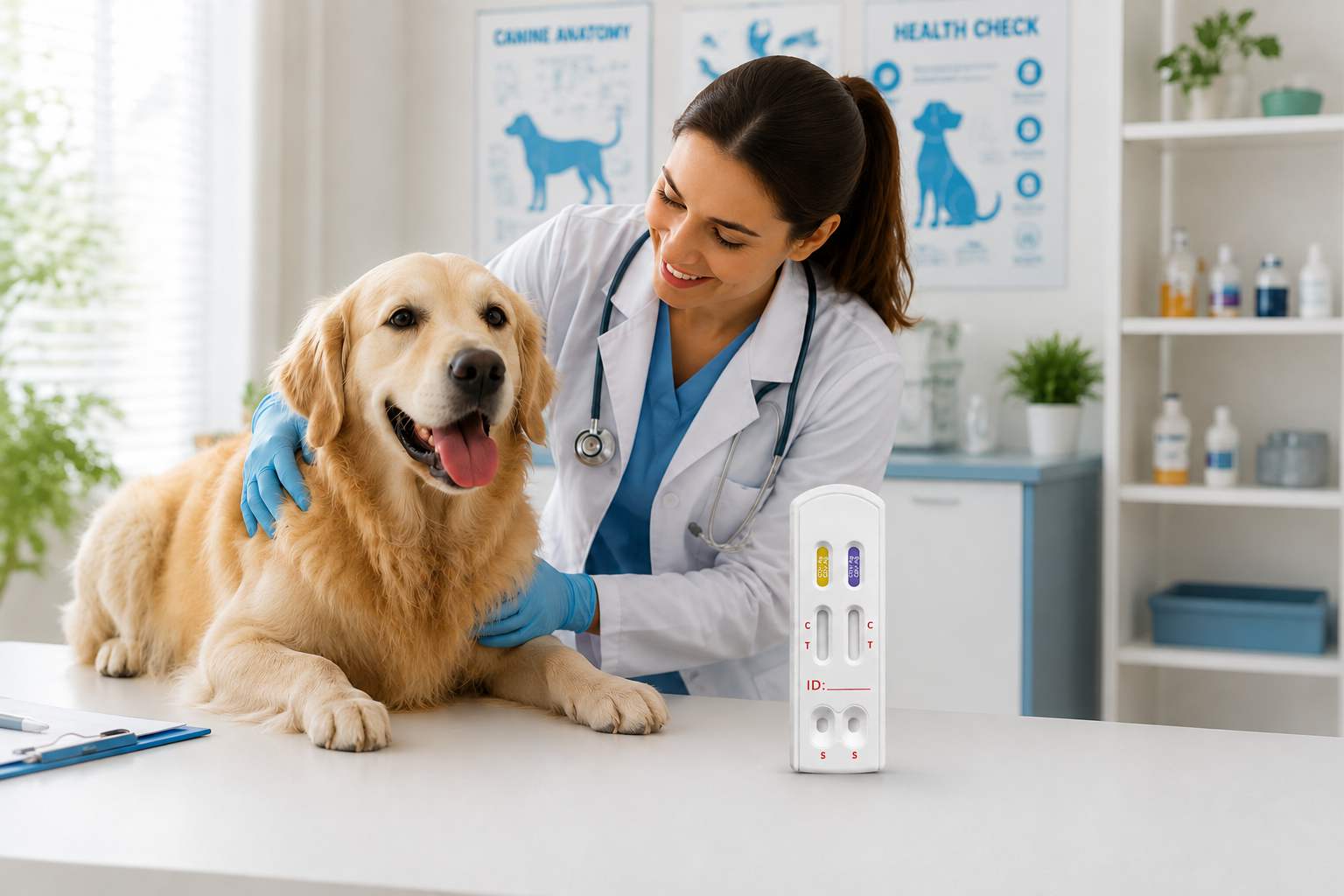
Step One | Qualitative Testing: Answering "Is it present?" When presented with a dog suspected of infectious disease, qualitative testing delivers a clear positive/negative result within a short time, helping veterinarians quickly determine whether CDV or CAV infection is present and enabling timely isolation to reduce transmission risk in waiting areas, wards, and multi-dog environments. The core value of this step is speed — enabling risk-based triage at the point of care.
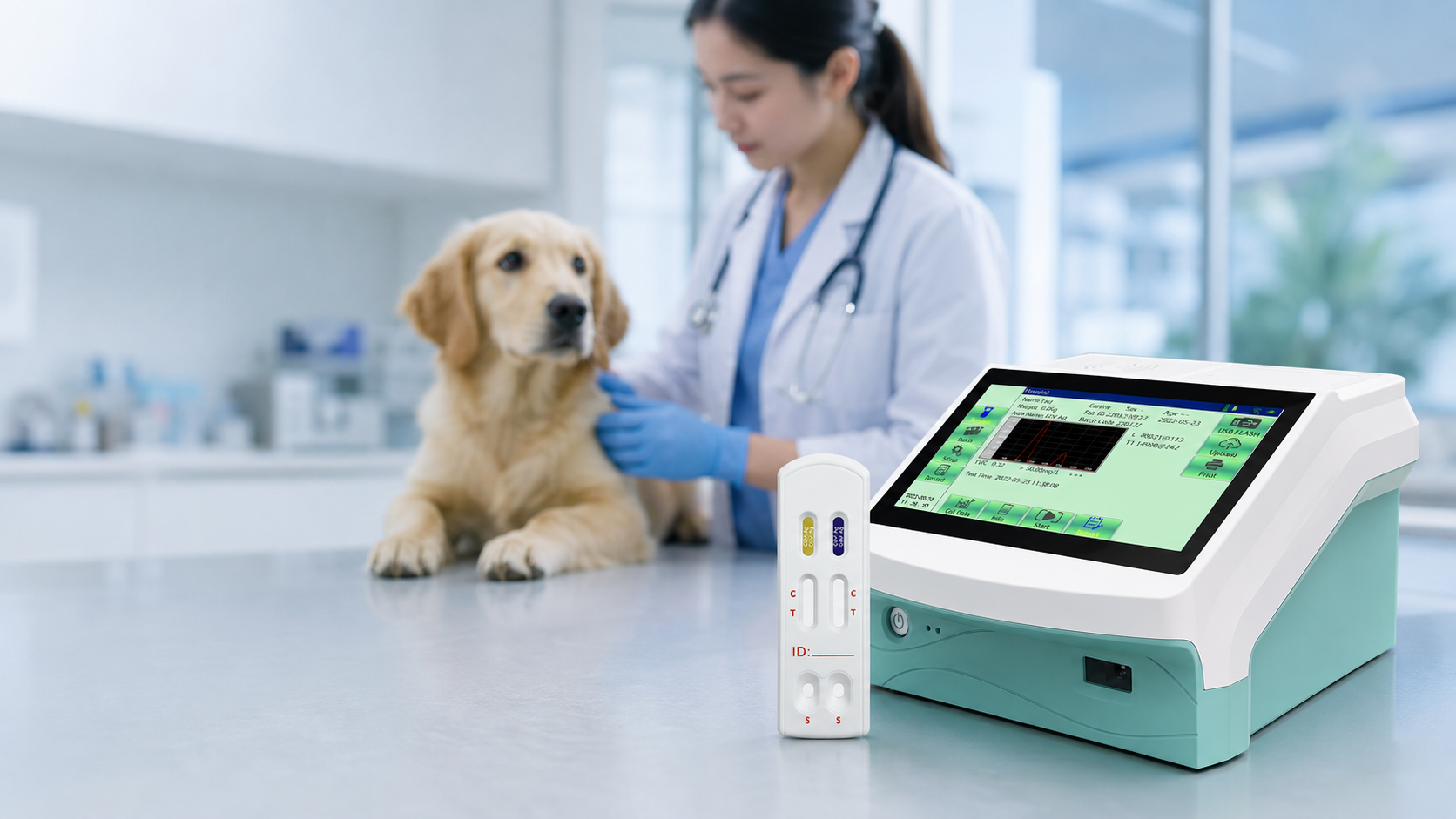
Step Two | Quantitative Testing: Answering "How severe is it?" For cases that test positive on initial screening, or where further insight into viral load and disease progression is needed, SunshinyMed's quantitative testing products can be used to obtain more precise, numerical results via instrument-assisted reading. Compared to the binary "positive/negative" output of qualitative testing, quantitative results help veterinarians better assess infection severity, monitor disease progression, and provide an objective basis for pre- and post-treatment follow-up and efficacy evaluation. Digitized results are also easy to store, retrieve, and compare, supporting case follow-up and medical record management.
Moving from "rapidly screening for infection" to "quantitatively assessing disease severity," SunshinyMed's qualitative and quantitative products work in sequence along the clinical decision-making timeline — helping veterinarians respond more confidently to diseases like CDV and CAV, where early symptoms are non-specific yet progression can be rapid.
4. Flexible Configuration for Different Practice Settings
- Smaller clinics, mobile veterinary services, or facilities with limited laboratory resources can prioritize convenient qualitative testing products to meet day-to-day screening needs.
- Animal hospitals and specialized laboratories can build on qualitative screening by adding quantitative testing and instrument-assisted reading, enabling severity assessment, result storage, and case tracking, and raising the overall standardization of the diagnostic workflow.
Facing diseases like CDV and CAV, where early symptoms are non-specific and progression can be rapid, a "qualitative screening, quantitative assessment" two-step diagnostic approach helps veterinarians identify risk faster and gauge disease severity more accurately. If you're interested in our product portfolio, feel free to reach out to us at [email protected]. We look forward to providing animal hospitals, veterinary laboratories, and business partners worldwide with practical, high-value diagnostic solutions, working together to advance the early detection and clinical management of canine infectious diseases.