
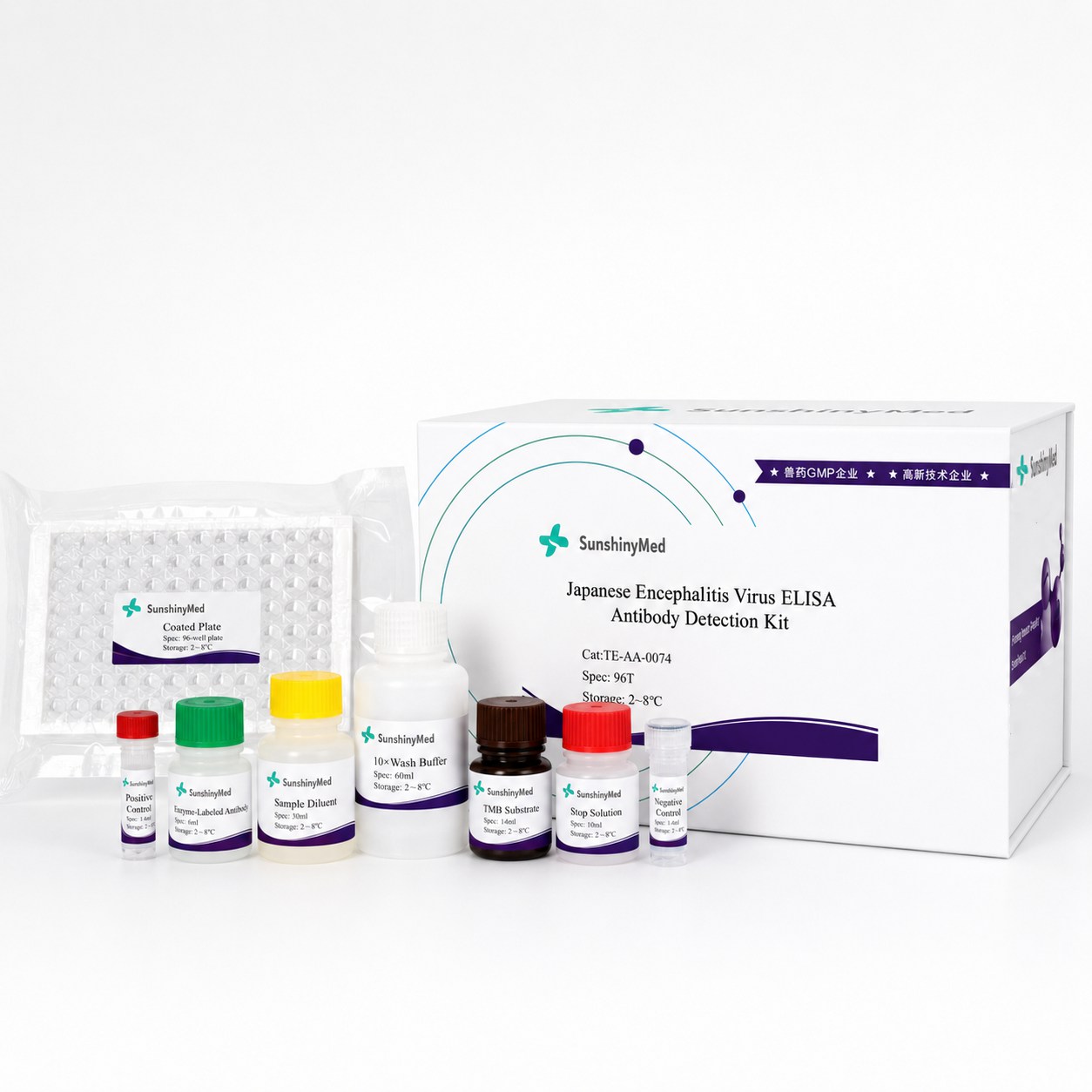


Japanese Encephalitis Virus (JEV) ELISA Antibody Test Kit
Japanese Encephalitis Virus (JEV) is a member of the family Flaviviridae and the genus Flavivirus, and is closely related to dengue virus, West Nile virus, and Zika virus. The disease was first identified in Japan in the late 19th century and is now endemic in many parts of Asia and the Pacific region, including certain areas of Australia. JEV is primarily transmitted through mosquito bites, with mosquitoes of the genera Culex, Aedes, and Anopheles potentially involved in transmission. The virus can infect a wide range of hosts, including pigs, horses, goats, sheep, cattle, waterfowl, and humans. Most infected animals are dead-end hosts and generally cannot transmit the virus back to mosquitoes. Pigs, however, are important amplification hosts, as mosquitoes can acquire the virus from infected pigs and subsequently transmit it to other pigs or humans.
Japanese encephalitis virus infection usually does not cause obvious clinical signs in adult sows. However, infection during pregnancy may affect the fetus through transplacental transmission. Infection before 70 days of gestation may result in stillbirths, abortions, or severe congenital abnormalities, including hydrocephalus, cerebellar hypoplasia, subcutaneous edema, and hepatic and splenic necrosis. Infected boars may develop testicular edema, reduced sperm motility, and temporary infertility. The disease can spread widely within pig populations; for example, surveys in certain regions of India have indicated that approximately 7% of pigs may carry the virus. As amplification hosts, infected pigs can increase the risk of human exposure through mosquito-borne transmission. Japanese encephalitis is estimated to cause approximately 70,000 human cases each year, with a mortality rate of around 20%–30%; about half of survivors may experience long-term neurological sequelae.
Product Information
【Product Name】
Porcine Japanese Encephalitis Virus Antibody ELISA Test Kit.
【Specification】96T/Box.
【storage Conditions】2~8'c.
【Shelf Life】12 months, Avoid repeated freeze-thaw cycles.
【Samples】Serum.
【Intended Use】
This kit can be used to detect JEV-specific antibodies in porcine serumand the test results serve as a basis for evaluating viral infection orvaccination immunity levels.
Product Features
Standardized Protocols
Pre-coated plates andcalibrators minimizehuman error and enhanceresult comparability.
Automation Compatibility
Compatible withmicroplate readers andlaboratory automationsystems.
Simplified Workflow
Requires no specializedinstruments, suitable forrapid screening inveterinary clinics or farms
High Reproducibility
Stable productionprocesses ensureconsistent performanceacross reagent batches.
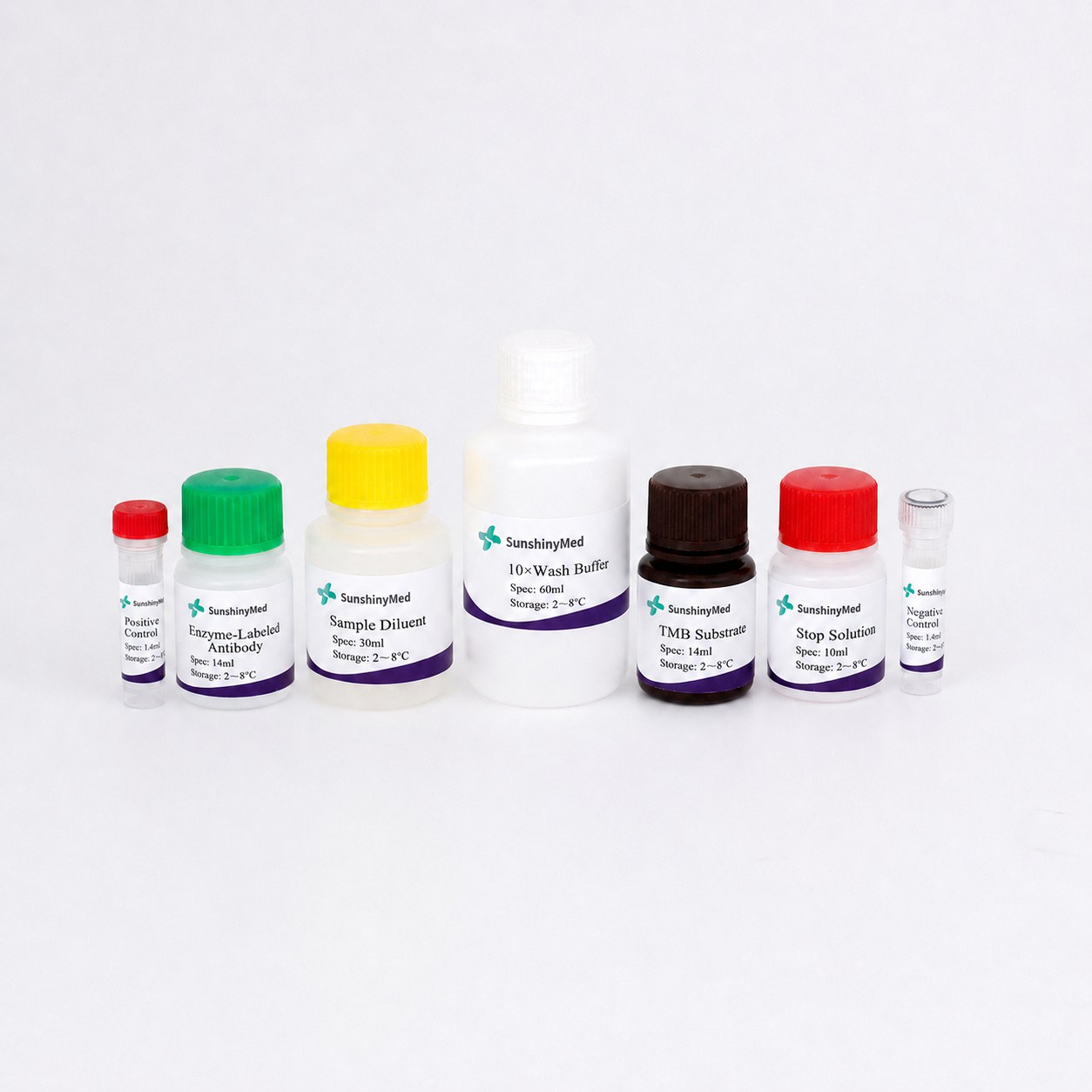
| 01-Positive Control | 1.4ml/tube×1 |
| 02-Negative Control | 1.4ml/tube×1 |
| 03-10×Wash Buffer | 60ml/bottle×1 |
| 04-Enzyme-labeled Antibody | 14ml/bottle×1 |
| 05-Sample diluent | 30ml/bottle×1 |
| 06-TMB Substrate | 14ml/bottle×1 |
| 07-Stop Solution | 10ml/bottle×1 |
| 08-Instructions | 1 serving |